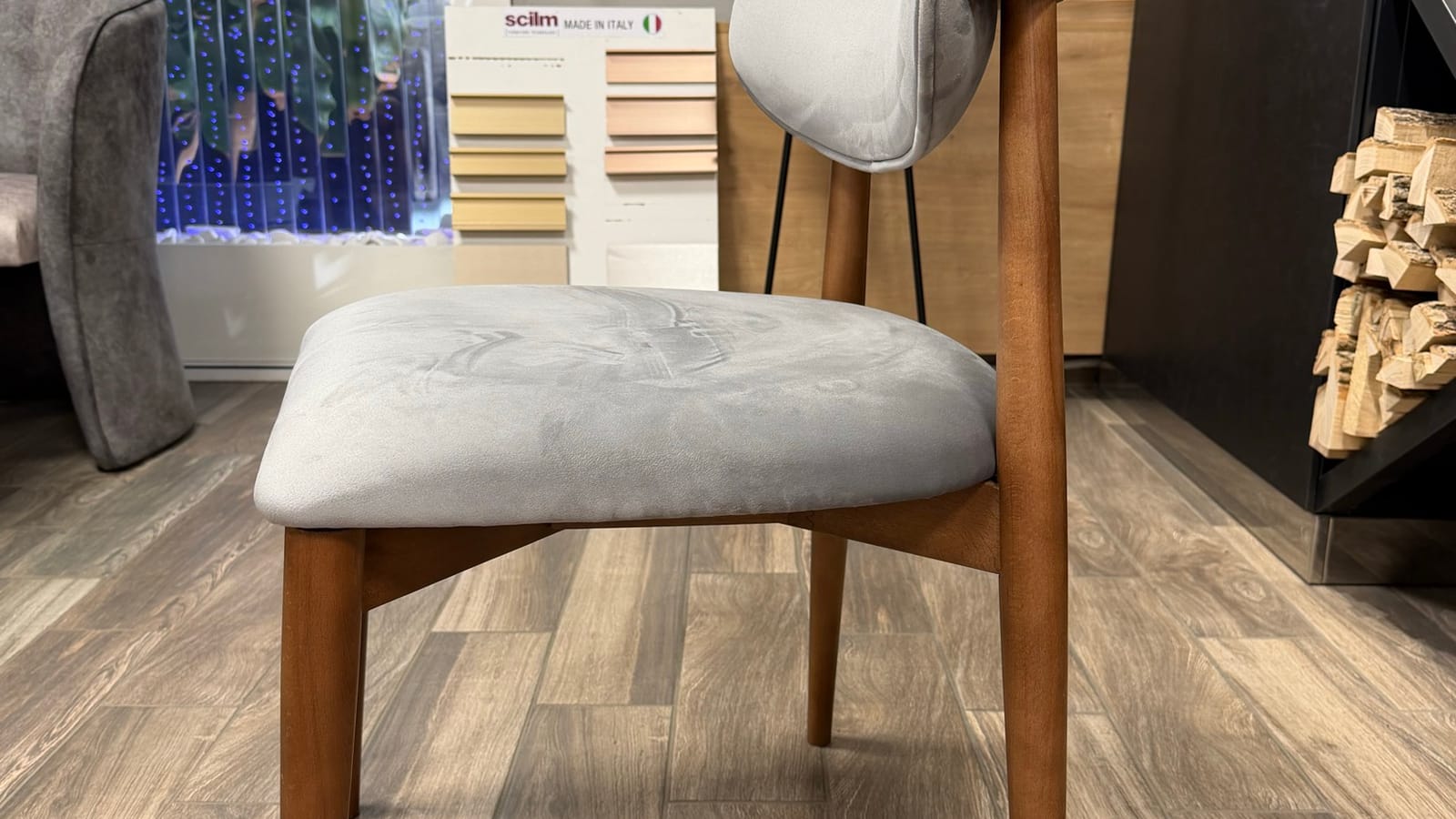
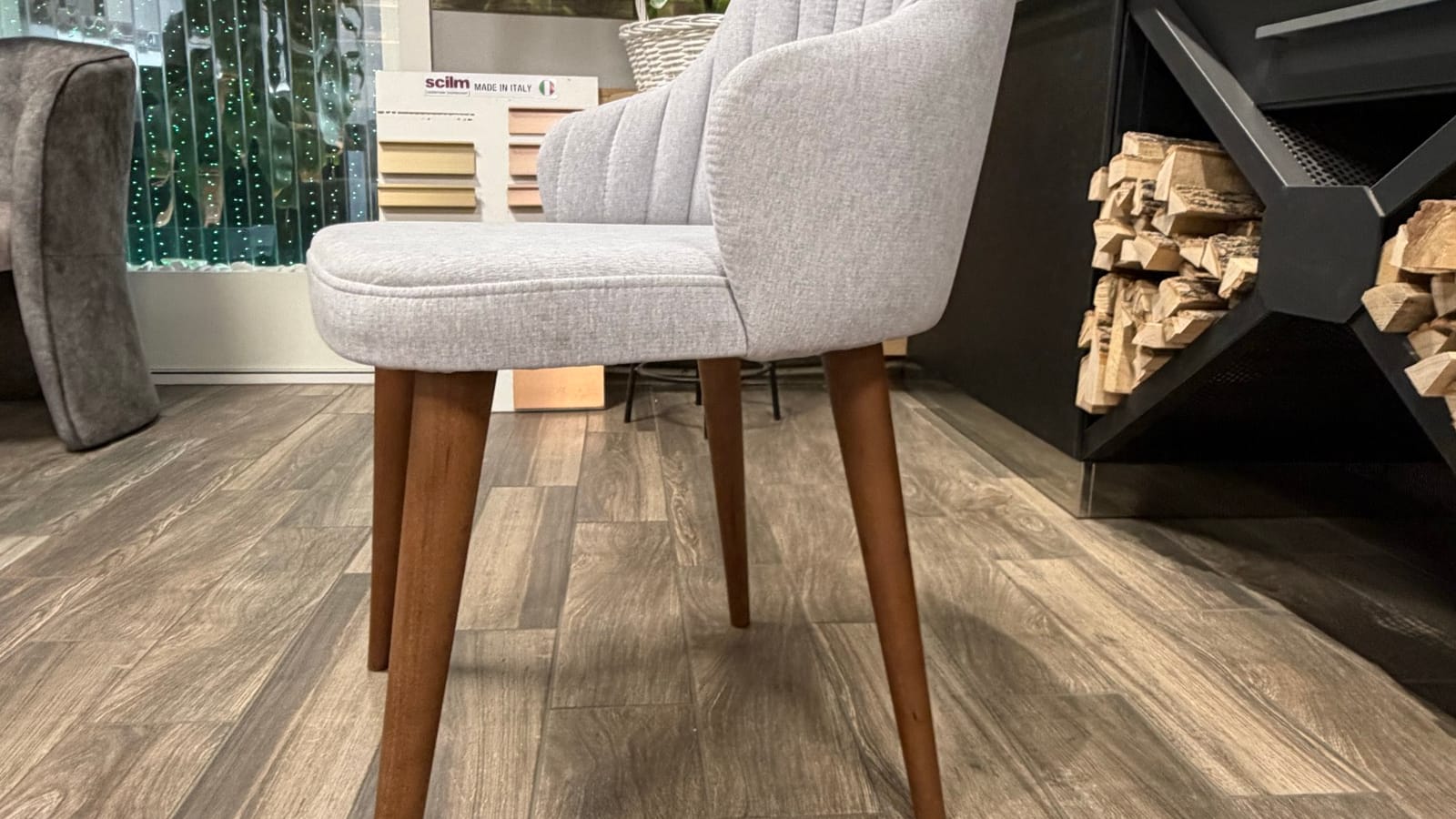
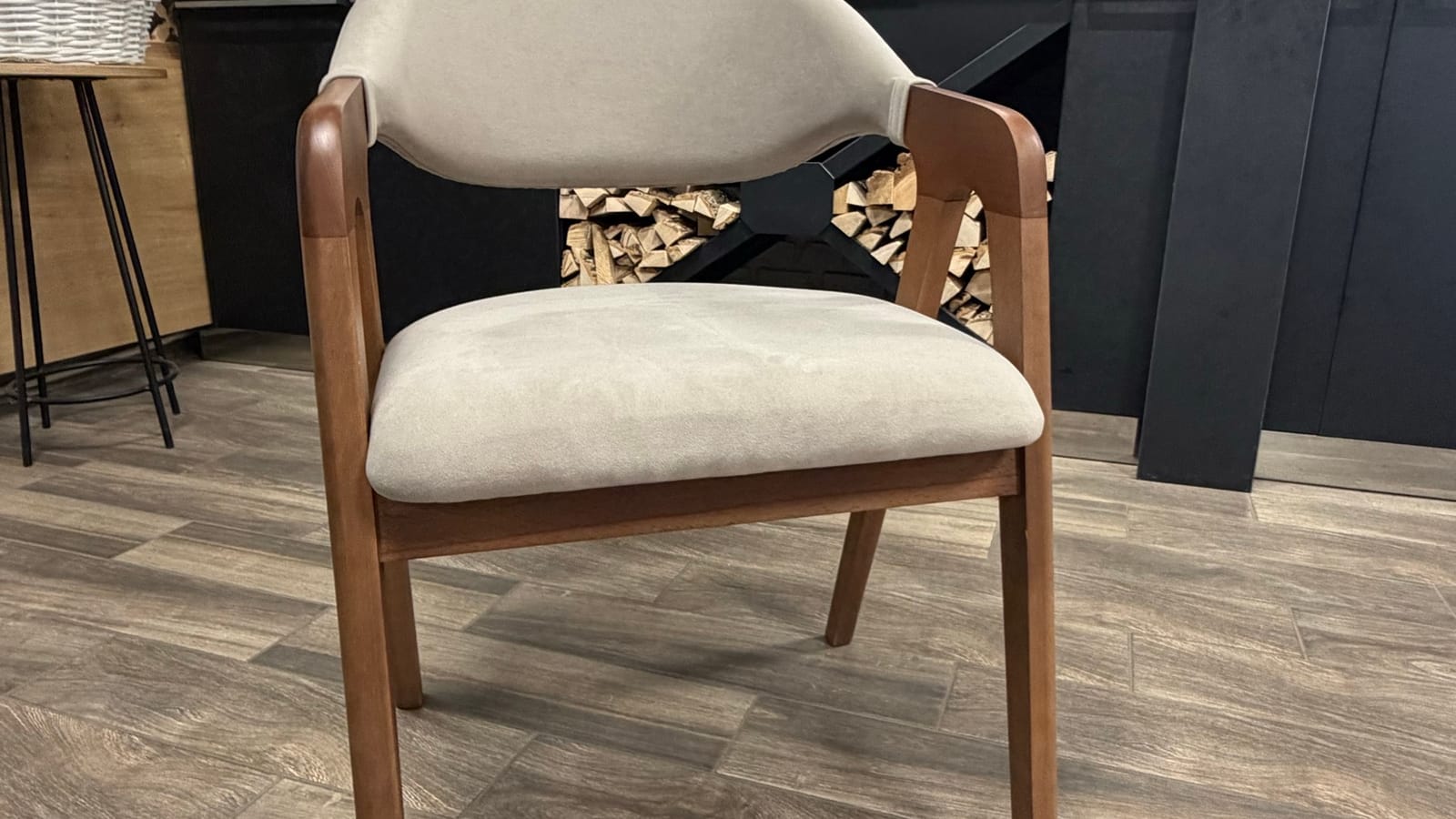
How long a fabric lasts: the Martindale guide in plain words
What that number on the fabric label means, what threshold you need at home, what you need in a restaurant, and why colour matters less than you think.
On the label of any serious upholstery fabric you will find a number followed by the word "Martindale". It is the one figure in the technical sheet worth checking before you choose a colour, because it tells you how long the fabric will keep looking new.
What the test measures
A machine rubs a sample of fabric against a standardised surface, in circles, until the first signs of wear appear. The number of cycles up to that point is the Martindale value. It is not a guarantee measured in years — that depends on how hard you use the piece — but it is the best direct comparison between two materials.
The thresholds that matter
Below 15,000 cycles: decorative fabrics, suitable for cushions and drapery, not for chairs. Between 20,000 and 40,000: normal domestic use, meaning the chairs at the table where you eat every day. Above 40,000: commercial use — restaurants, cafés, waiting areas. Above 100,000: very high-traffic spaces such as airports or hotel lobbies.
In practice, for a family of four eating at home daily, we recommend a minimum of 30,000. For a holiday house used two months a year, 20,000 is enough.
What the number does not tell you
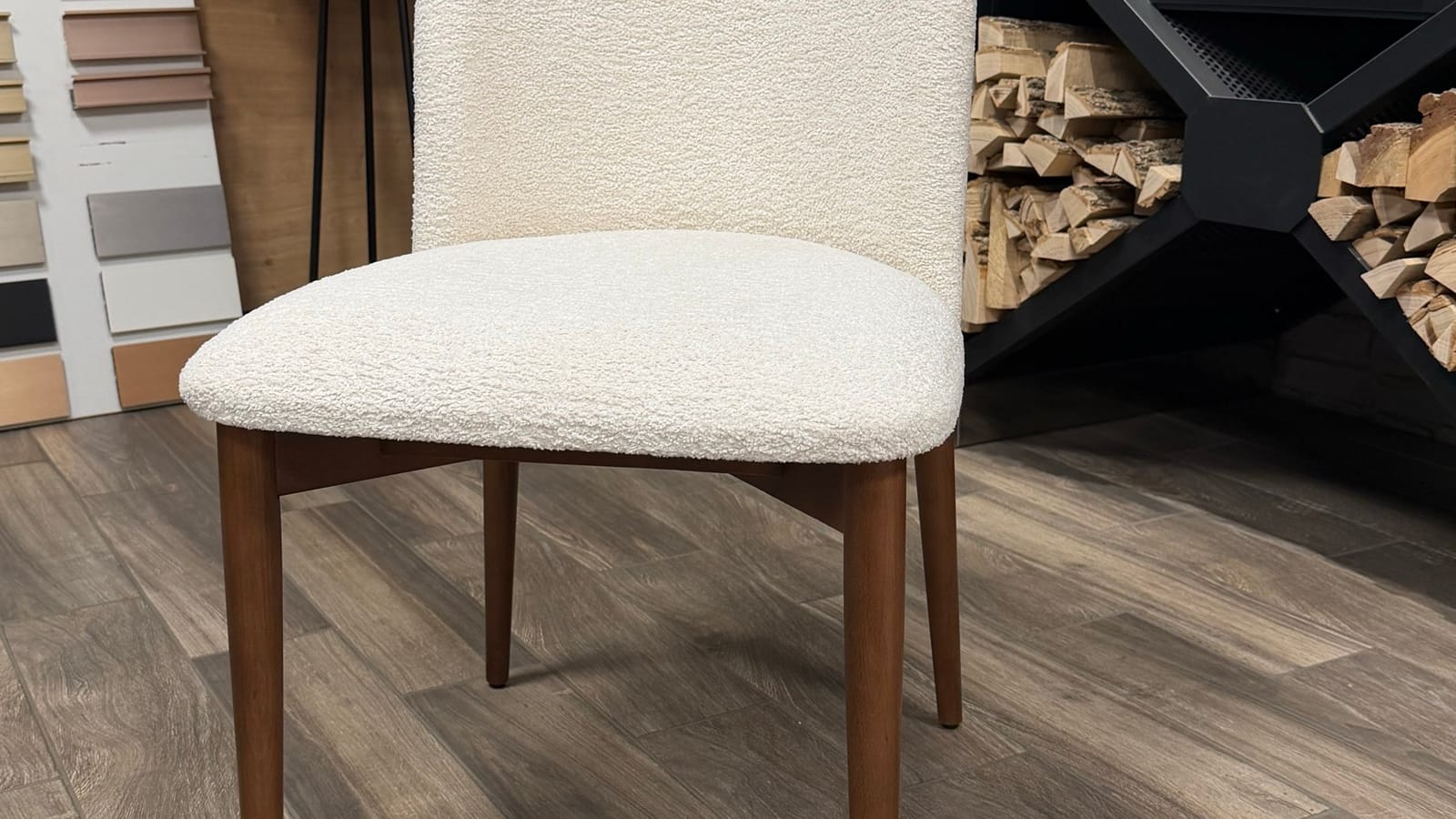
Martindale measures abrasion, not snagging. A bouclé can be rated at 40,000 cycles and still unravel if a cat sharpens its claws on it once, because the loops pull like a thread in a jumper. If you have pets, ask about the fabric's structure rather than only its Martindale figure: flat, short-fibre weaves are the only safe option.
Equally, the number says nothing about stain resistance. A stain-treated velvet rated 30,000 will look better in five years than an untreated textile rated 50,000, if wine gets spilled at your table.
Colour and pattern matter more than you think
A plain, light fabric shows every mark. A textured one, or one with a discreet pattern, hides wear for years. If children eat at your table often, choose a mid tone with texture — not because it does not get dirty, but because it does not show.
The care that actually extends a fabric's life
Vacuuming monthly with a soft brush pulls out the abrasive dust between the fibres, which otherwise acts as fine sandpaper every time someone sits down. Stains are blotted, never rubbed. And for any fabric, direct sunlight fades it faster than mechanical wear — a thin curtain does more than an extra ten thousand Martindale cycles.