Solid wood or chipboard: how to spot a chair that lasts
Four checks you can do in a shop in two minutes without dismantling anything, plus the questions an honest seller answers directly.
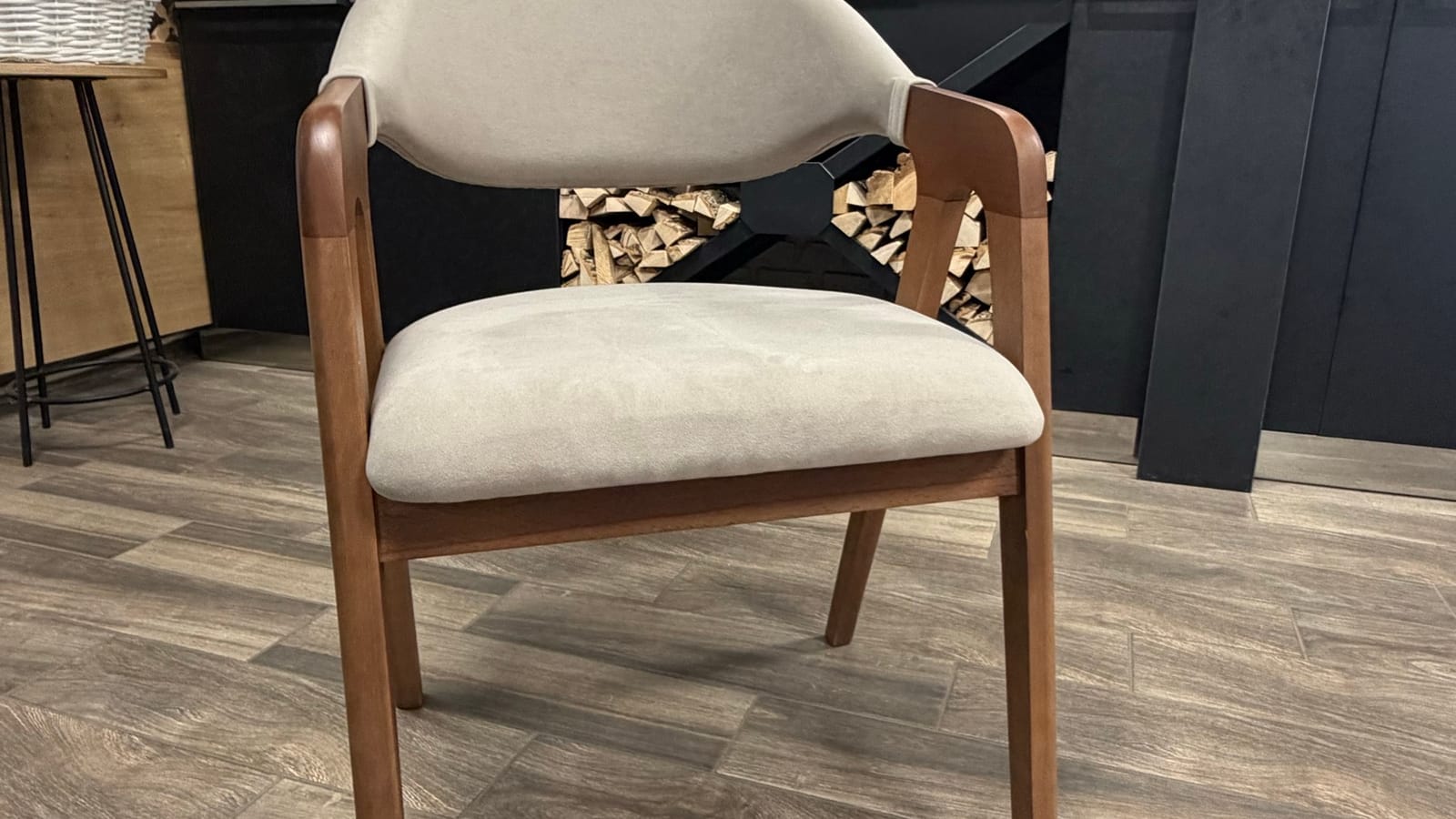
In a catalogue photograph, a solid beech chair and one with veneered chipboard legs look almost identical. The difference appears after two years, when one creaks with every movement and the other does not. Here is how to tell them apart before you pay.
1. Pick it up
A solid wood dining chair weighs between 4.5 and 7 kg. A panel-based one is either suspiciously light or unusually heavy, because chipboard has high density but low mechanical strength. Weight alone does not decide it, but it gives you the first clue.
2. Look at the joints
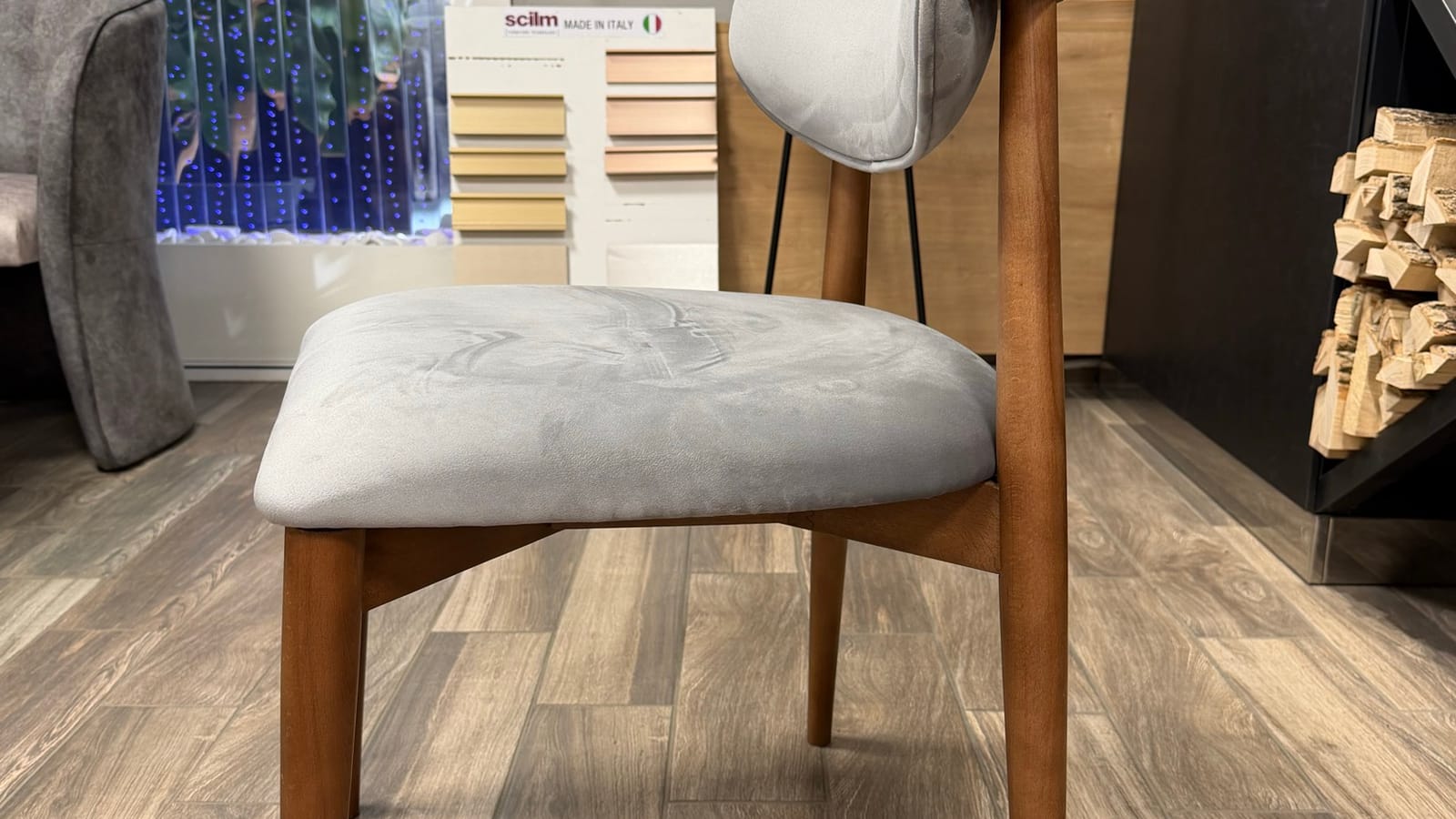
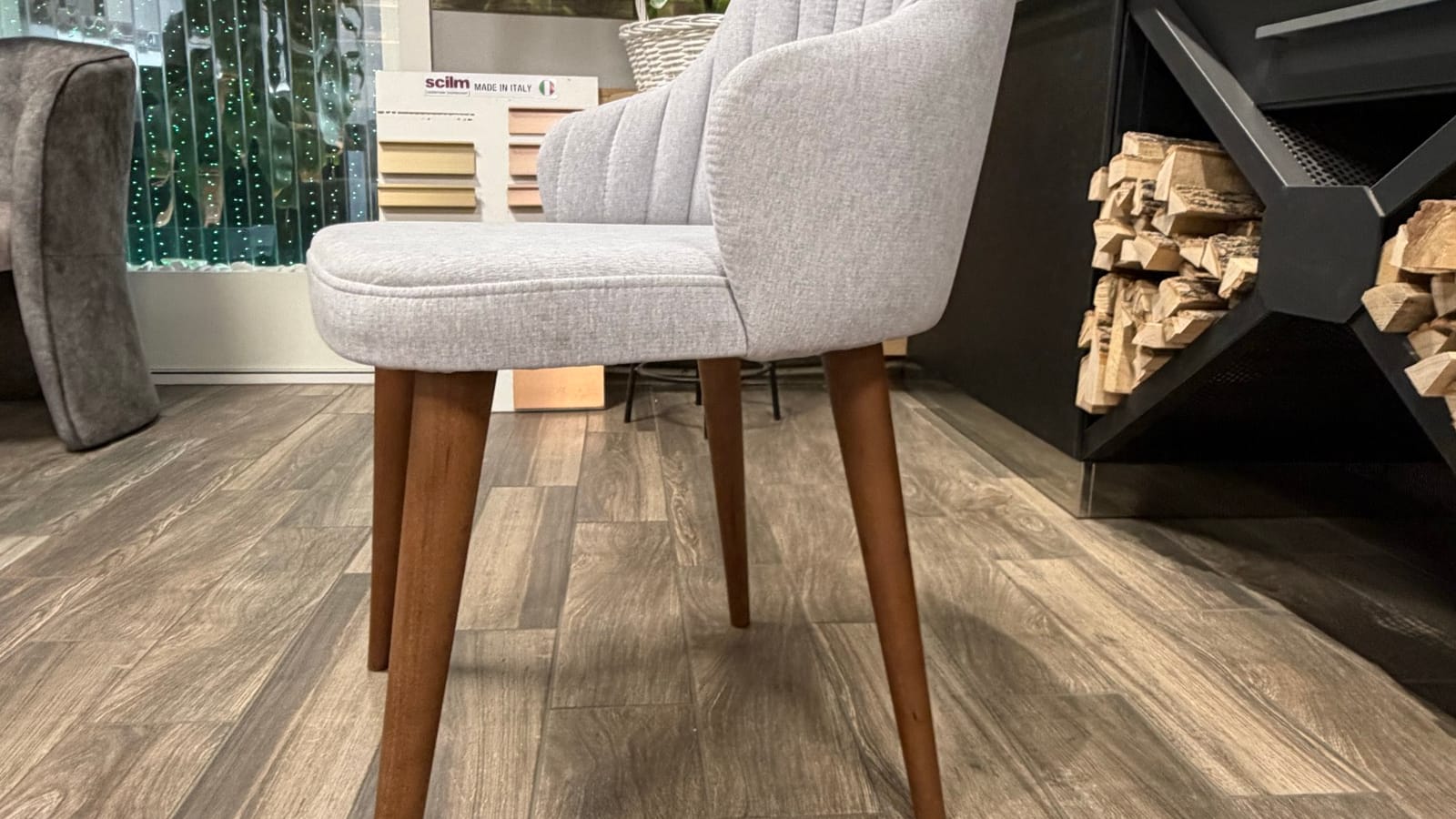
In solid wood, the legs enter the seat through dowels or tenons, and the joint reads as a fine wood-on-wood line. If you see a screw head covered by a plastic cap in a wood colour, the structure relies on screws driven into panels. A screw in chipboard loosens under repeated load and cannot be retightened many times.
3. Follow the grain around the corners
Solid wood has continuous grain that runs from one face of the leg onto the next. On veneer, the pattern stops abruptly at the edge or repeats identically on two different legs — which does not happen in nature. If two legs share exactly the same figure, it is printed veneer.
4. Feel the edge under the seat
This is the area manufacturers finish least, because nobody sees it. There you can feel directly whether it is timber or a panel covered with edge banding. Banding has a crisp edge, feels slightly cooler to the touch, and sometimes the glue line is detectable with a fingernail.
The questions that settle it
Ask what species the frame is and what density the seat foam is. A manufacturer working in solid wood answers immediately: "beech, 35 density". One who deflects with phrases like "superior quality timber" is effectively telling you the structure is not what it appears to be.
When chipboard is a reasonable choice after all
We are not arguing that every panel is bad. For casework that never moves — wardrobes, storage tops — good chipboard is perfectly rational and costs considerably less. The problem is chairs, the one object in a house subjected to dynamic loads hundreds of times a day. There the joint has to work, not merely hold.